
A new product, a difficult development process and an unsuccessful outcome can all feature in an R&D claim. None, on its own, establishes that the work qualifies for tax relief.
The First-tier Tribunal’s decision in RDM Wines Limited v HMRC [2026] UKFTT 1348 (TC), released on 24 September 2026, illustrates how a claim can unravel when the account of the work is not supported by the evidence. It also shows why explaining the commercial ambition is only the beginning.
The appeal concerned the year ended 31 October 2021 and £43,387.01 of disputed tax and tax credit repayment. The Tribunal dismissed it.
A commercial idea with technical challenges
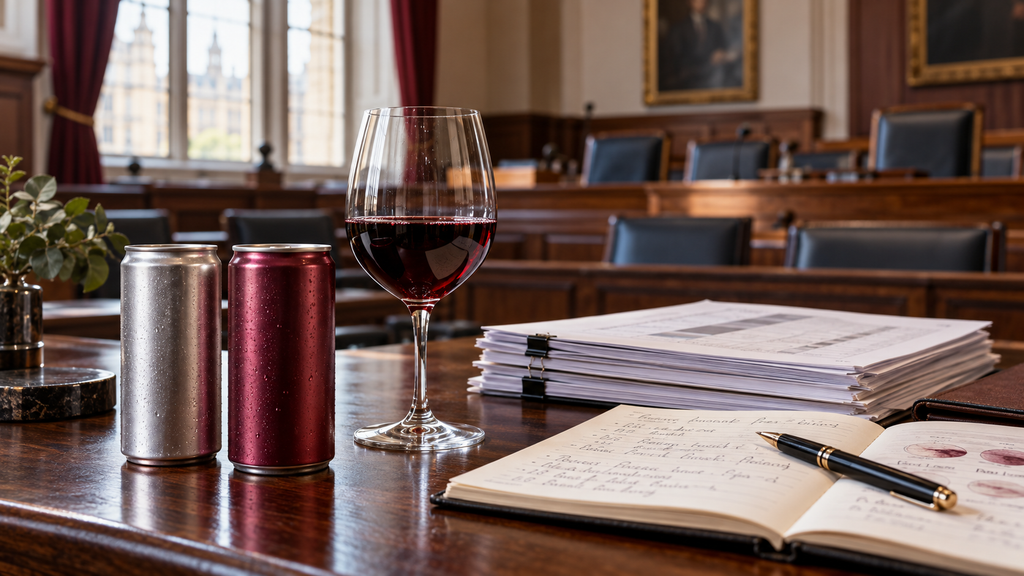
RDM, a fine wine importer and distributor, wanted to offer high-quality wine in cans for concerts, sporting events and other venues where glass was unsuitable.
The company said that it had worked with a South African winery, Riebeek Valley Wine Co, on an iterative development process. Its account involved testing different wines, can linings and gases to preserve quality and shelf life. One approach involved putting 187ml of wine into a 200ml can and filling the remaining space with inert gas.
These are subjects capable of involving science and technology. However, the question was whether the particular activities satisfied the R&D definition, and whether RDM could prove that they had taken place.
The dates mattered
RDM described work beginning in 2021. The contemporaneous documents pointed to a relationship beginning in or shortly before November 2022.
That discrepancy also raises an obvious claim preparation issue: the appeal concerned an accounting period ending in October 2021. Evidence of later activity could not, without further support, establish that the claimed work had occurred in that earlier period.
The Tribunal found no correspondence, call records, invoices or engagement documents supporting the asserted relationship between May 2021 and October 2022. By contrast, the November 2022 emails recorded a substantial wine order, and an internal supplier email described RDM as a new client.
The Tribunal concluded that the initial canning run occurred in or after November 2022. It also found that RDM had not proved the extensive iterative testing process described in its account.
For businesses preparing claims, this is a useful reminder to establish the chronology before writing the technical narrative. A report needs to distinguish what happened in the claim period from later development, production and commercial activity.
A later letter could not repair the evidence
RDM relied on letters from the winery, including a detailed letter produced shortly before the hearing. The Tribunal admitted that letter but gave it very little weight.
Its concerns went beyond lateness. The letter relied on recollection years after the events, introduced details absent from earlier letters and lacked supporting records of the asserted testing. Its author did not attend to give evidence and answer questions.
There is an important distinction here. HMRC did not allege dishonesty, and the Tribunal expressly distinguished failure to prove an account from a finding that someone had been dishonest.
An honestly held recollection can still be inaccurate. A persuasive description written years later can still leave unanswered questions about dates, methods and results.
In my view, the practical lesson is to preserve the evidence generated by the work itself. Test results, correspondence, meeting notes and instructions to suppliers can help explain both what happened and why the next step was taken. Where another organisation holds those records, obtaining access early can be crucial.
A project needs a method or plan
The Tribunal also found that RDM had not demonstrated a systematic approach constituting a method or plan. It identified missing evidence of project planning, unsuccessful test results and decisions to pursue alternative approaches.
This was a separate difficulty from proving the scientific or technological advance sought. The company had described an iterative process which could constitute a method or plan, but the Tribunal found that it had not proved that process occurred.
The practical point is to explain how the activities connected: what was tested, what was learned and how the results informed subsequent work. The records should support that explanation.
The technical explanation must go beyond the product
RDM also failed to establish that its activities sought an advance in science or technology.
The Tribunal considered an industry publication, the Winemaker’s Guide to Wine in a Can, which both parties accepted as reflecting the relevant state of industry knowledge. It discussed issues including oxidation, can linings and the use of inert gases.
RDM did not adequately explain how its work went beyond that existing knowledge or what was readily deducible by a competent professional.
The only witness was candid that he did not have scientific or technological expertise. Mr Martinole, whom RDM identified as a competent professional, provided no evidence to the Tribunal, and no one from Riebeek attended as a witness. The Tribunal found that the supplier’s letters did not establish the relevant industry baseline or explain how the activities sought an advance beyond it.
This is where an R&D narrative needs precision. Wanting a better product explains the business objective. The technical explanation must identify the capability being sought, what was already known and why achieving it involved scientific or technological uncertainty.
Commercial novelty alone does not answer those questions.
The cost figures also needed support
The claim report attributed £139,188 of salaries and wages to the asserted project. The Tribunal found no contemporaneous internal documentation substantiating the claimed levels of involvement.
It also noted generic wording about using timesheets or estimates, which did not establish what records had actually been used. Under cross-examination, the director acknowledged that his own 35% time allocation might have been excessive.
The Tribunal did not determine the amount of qualifying expenditure because the claim had already failed on eligibility. Nevertheless, its observations show why the cost calculation and technical account need to agree.
An allocation should be traceable to the person’s actual activities and a defensible basis for estimating their time. General wording about a calculation method cannot supply missing support.
What should claimants take from the decision?
This decision does not establish that wine packaging cannot qualify for R&D relief. Nor does an unsuccessful outcome prevent a project from qualifying. The test concerns the advance sought and the work undertaken to resolve scientific or technological uncertainty.
RDM Wines illustrates the need for a claim to connect the technical explanation, the chronology, the supporting evidence and the expenditure. A well-written report can explain that connection. It cannot create it.
If you are preparing an R&D claim or responding to an HMRC enquiry, RandDTax can help assess the technical basis and the evidence supporting it. Contact us to discuss your claim.
Christopher Toms MA MAAT
Compliance Director
RandDTax
This article is an opinion piece for general information and does not constitute tax, legal or other professional advice. Each R&D claim depends on its own facts and the rules applicable to the relevant accounting period. Professional advice should be sought before taking action.
Source: RDM Wines Limited v HMRC [2026] UKFTT 1348 (TC), particularly paragraphs 51–70, 81–94. Read the judgment.